
Chiropractor Chandler AZ
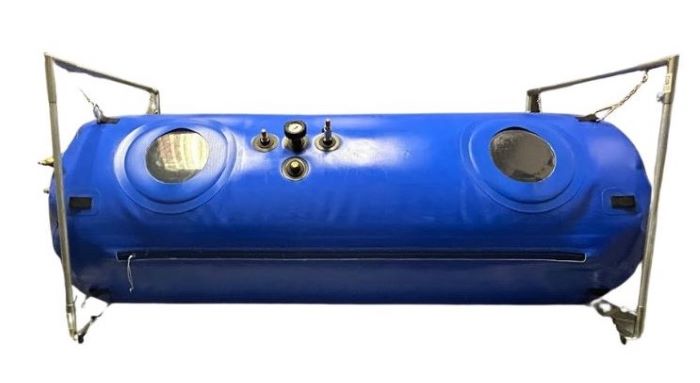
Hyperbaric Chamber
Hyperbaric Oxygen Therapy (HBOT) works on a simple physical principle: the greater the pressure, the more gas can be dissolved into a liquid. By being in a hyperbaric chambers more oxygen is picked up in the lungs, dissolved in the blood stream, and delivered to the tissues.
By dissolving oxygen directly into the plasma, more oxygen can reach inflamed and injured tissue. The increased oxygen enhances cellular repair and recovery.
Hyperbaric chambers can help with stimulating the body’s natural healing and repair mechanisms, recovering from surgery, reducing inflammation,diabetic ulcers, PTSD, and more. Learn more about the benefits of hyperbaric oxygen therapy.
How Hyperbaric Therapy Works
Frequently Asked Questions
What is hyperbaric oxygen therapy (HBOT)?
HBOT involves breathing increased oxygen in a pressurized chamber to boost healing and repair in the body by increasing oxygen delivery to the tissues.
How does HBOT work?
Under pressure, more oxygen is bound to the hemoglobin in red blood cells, and increased oxygen molecules are dissolved in the blood. More oxygen in the bloodstream means more oxygen is delivered to the tissues. It is highly effective for chronic and non-healing wounds and illnesses due to its increased oxygen delivery, which is why it is highly recommended for diabetic ulcers and other skin conditions that are not healing. In addition to the increased healing seen with oxygen and increased mitochondrial activity, as well as the production of ATP, there is also an anti-inflammatory effect and a positive response from the immune system.
Is HBOT a new therapy?
No. Hyperbaric oxygen therapy has been used for many years. It was initially used for diving-related illnesses, such as decompression sickness, also known as the “bends.” It was then studied for burn victims and to enhance skin healing.
What types of chambers are used?
Soft and hard-sided chambers are used. Hard chambers have greater oxygen concentration and pressure than soft-sided chambers.
What is mHBOT?
Mild Hyperbaric oxygen therapy, which refers to soft-sided chambers.
What is the difference between hard and soft chambers?
Hard chambers reach higher pressures and utilize 100% oxygen. Soft chambers utilize lower pressure and either room air or an oxygen concentrator to increase available oxygen.
Does HBOT hurt?
No, most people describe the experience as relaxing. A few people will experience pressure behind the ear or a sensation of a headache if they cannot equalize pressure in their ears. It is the same feeling as when our ears are not equalizing pressure on an airplane, which is why people refer to it as “airplane ear.” Often, yawning, chewing gum, or swallowing will solve the problem. Infrequently, it will persist, so we lower the pressure and stop the therapy. Often, this occurs when a person is experiencing a head cold, allergy, or sinus congestion. Most people are then able to reschedule and complete the therapy on another day.
What can I expect during hyperbaric treatments?
You will hear the pump pressurizing the chamber at one end and air escaping through the escape valve on the other end. The consistent hum of the pump can be soothing. Some people sleep. Others read or are on their phone. In soft-sided chambers, you can bring electronics into the chamber. Electronics are not allowed in hard-sided chambers.
How is HBOT administered?
You lie in the chamber, it pressurizes over a few minutes. The session usually lasts 60-90 minutes, and then depressurizes over several minutes.
How do you feel after treatment?
Most people feel relaxed. Some people feel energized while others can feel tired after treatment. It depends on the person.
How long before results are seen?
Some notice improvements in a few sessions; others take weeks. Acute injuries and post-surgical responses occur very quickly Long-term benefits depend on the condition. Wound healing is usually permanent; those used for neurological conditions may require ongoing maintenance.
Who should avoid hyperbaric treatments?
Those with untreated pneumothorax, certain ear or sinus conditions, or recent ear surgery.
Is the hyperbaric chamber safe for kids?
Yes, under supervision. I get into the chamber with my children, and we have seen a positive response. It's used off-label for conditions like autism, cerebral palsy, and more.
What conditions benefit from hyperbaric treatments?
Any condition that will benefit from increased oxygen, which is why acute and chronic conditions respond well to treatments. We see many people post-surgery to enhance healing. People with chronic respiratory illness benefit. Diabetic foot ulcers are commonly recommended to seek hyperbaric treatments. In addition, a growing number of people utilize the therapy for age-related and neurodegenerative diseases.
People have seen professional athletes utilize hyperbaric oxygen for recovery, such as Lebron James and Novak Djokovic. It is gaining popularity among individuals seeking wellness or looking to optimize their health.
More information below on specific conditions.
How many sessions will I need?
It depends on your condition being treated, physical health, and goals. Treatment plans can range from 5 to 80.
How much does it cost?
We utilize soft-sided chambers and charge $50 per session. Packages of 6 and 12 reduce the per-session costs. We know we charge less than other offices, and we do this because we want people to utilize and benefit from hyperbaric treatments. Hard-sided chambers typically cost between $100 and $150 a session.
Is there a risk of fire or explosion?
Not for soft-sided chambers. Soft-sided chambers are very safe. In the news, people have reported several incidents involving hard-sided chambers that operate at 100% oxygen and higher pressures. There are increased requirements and supervision at these facilities that utilize hard-sided chambers due to the associated risks.
What if I'm claustrophobic?
The soft-sided chambers we utilize are one of the larger models available, and they have a window to see out of, which is helpful. Generally, if people are comfortable in elevators, they usually do well in the chamber. When a person cannot be in an elevator because of their claustrophobia, they often struggle being in a hyperbaric chamber.
Can HBOT treat PTSD or Traumatic Brain Injuries?
Early studies show potential; it's being explored but not yet widely accepted or approved. We have observed that some individuals respond well to the treatment, while others do not. It is once again an individual response.
References
Schaefer, S. (1992). Fundamentals of hyperbaric oxygen therapy. Orthopaedic Nursing, 11(6), 9-15.
Tibbles, P. & Edelsberg, J. (1996). Hyperbaric oxygen therapy. New England Journal of Medicine, 334(5), 1642-1648.